Fall Protection Engineering vs Rescue Services: Lifegear's Two Verticals Explained
By Lifegear Team
2026-10-22
Introduction: Lifegear's Two Verticals
Lifegear Safetech, established in 2007, operates across two distinct but connected verticals: industrial emergency and rescue management services, and engineering fall protection manufacturing.
Both verticals address different parts of the same industrial safety challenge. Fall protection engineering focuses on reducing the risk of falls through appropriately designed and implemented systems, while industrial rescue services focus on responding when an emergency occurs. Understanding how these functions work together helps organizations develop a more complete approach to workplace safety.
Fall Protection Engineering: Prevention First
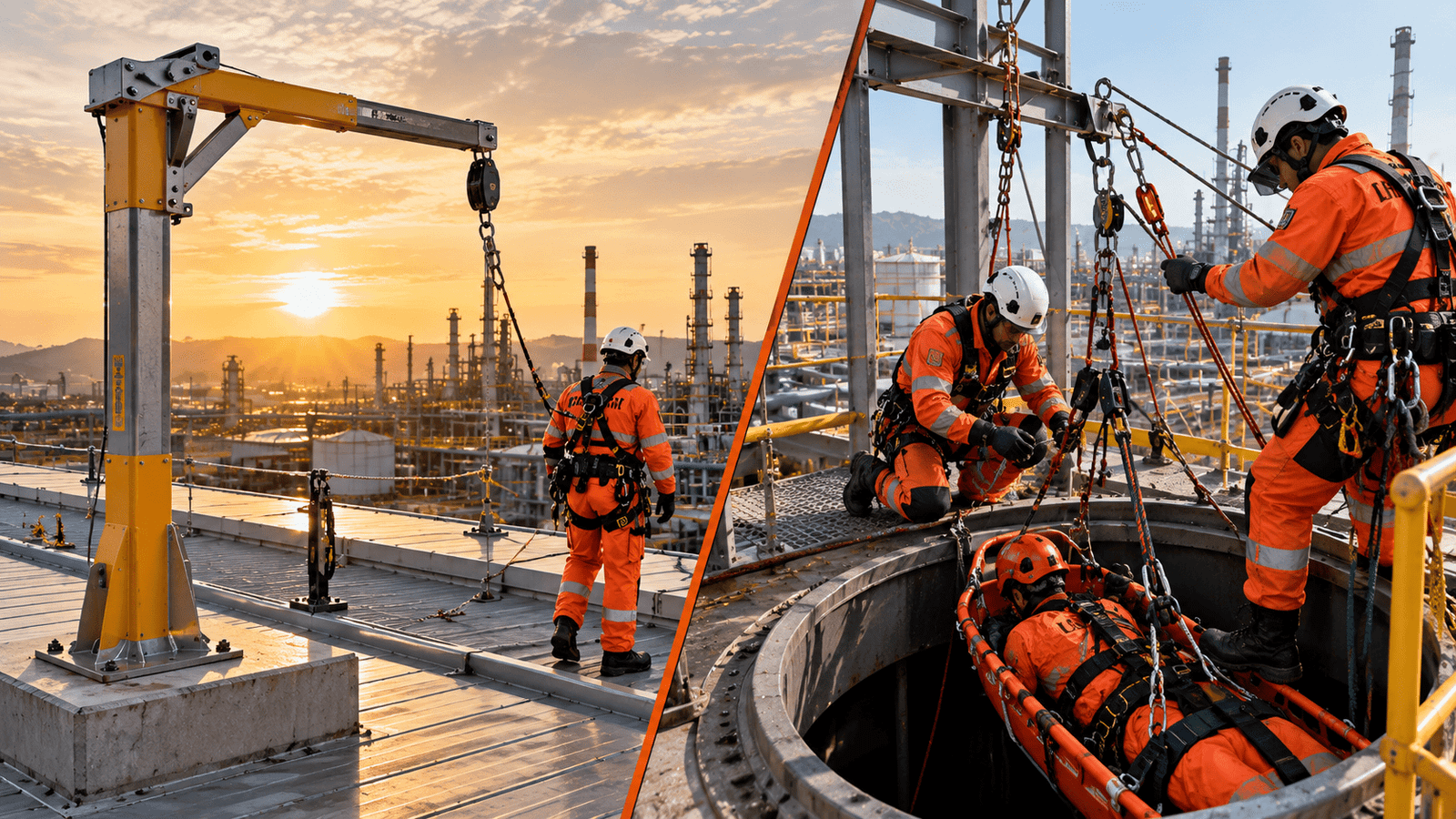
The fall protection side is engineering-first — physical anchor systems like the Girafe range (Out Rig Girafe, Girafe On Wheels, Counter Weight Girafe), designed to prevent falls before they happen. Lifegear was the first Indian company to launch a patented engineering fall protection system in India.
Fall protection systems are an important consideration wherever workers perform tasks at height. Selecting an appropriate solution requires an understanding of the work environment, the access requirements, the available anchorage options, and the risks associated with the task.
Engineered systems can help organizations plan safer access and work-at-height activities. Depending on the application, the solution may need to support specific work positions, provide suitable anchorage, or accommodate changing work locations. The choice of system should be based on the task, site conditions, applicable standards, and the manufacturer's requirements.
The objective is to consider fall hazards before work begins rather than relying entirely on emergency response after an incident. Engineering, risk assessment, appropriate equipment selection, and correct use all contribute to an effective fall protection approach.
Industrial Rescue Services: Response First
The rescue side is response-first — standby teams, equipment, training, and now AI tools like RAP and RASU, built to respond effectively when prevention isn't enough or an emergency still occurs.
Even when fall protection measures are in place, organizations need to consider what happens if a worker becomes suspended, is injured, or cannot return to a safe location independently. An emergency response plan should account for the hazards at the site, the people involved, the available rescue equipment, and the time required to reach and assist the worker.
Industrial rescue services help address these requirements through trained personnel, appropriate equipment, emergency preparedness, and planned response procedures. The level of preparation should reflect the site's specific risks and the types of activities being carried out.
Training and practical preparation are important because an emergency may require coordinated action rather than a simple equipment deployment. Teams need to understand their responsibilities, communicate effectively, and work within the procedures established for the site.
Digital tools such as RAP and RASU add another dimension to this approach by supporting rescue planning and safety-related alerting. These tools complement the broader process of preparing people, equipment, and procedures for an emergency.
Fall Protection Systems and Rescue Readiness: Why Both Matter
Fall protection engineering and rescue planning serve different purposes, but they should not be treated as unrelated activities.
A fall protection system addresses hazards associated with working at height. Rescue planning considers the actions required if an incident occurs despite the preventive measures in place. A complete approach considers both before work starts.
For example, a work-at-height activity may require an appropriate engineered fall protection solution, an assessment of the surrounding work environment, and a practical plan for responding to a worker who cannot safely return to the working level. The equipment, work method, and rescue arrangements should be considered together rather than developed in isolation.
This approach also helps organizations identify potential gaps before a job begins. Equipment availability, worker competence, communication, access routes, and rescue arrangements all need to be considered in the context of the actual site and task.
Prevention remains essential, but preparedness for the possibility of an emergency is equally important. Neither should be assumed to replace the other.
The Role of Engineering in Industrial Safety
Engineering-based fall protection requires more than choosing a product from a catalogue. The suitability of a system depends on the conditions in which it will be used and the requirements of the work being performed.
Factors such as anchorage arrangements, the working area, equipment configuration, access requirements, and the applicable safety requirements should be considered during planning. Installation, inspection, maintenance, and user training also contribute to the continued suitability of a system.
Organizations should ensure that fall protection equipment is selected and used in accordance with the manufacturer's instructions and relevant standards. Site-specific assessment and competent technical guidance are important when determining the right solution for a particular application.
By approaching fall protection as an engineering requirement, organizations can make safety considerations part of work planning rather than treating them as an afterthought.
A Complete Industrial Safety Lifecycle
Together, these verticals form a complete safety lifecycle: engineered prevention paired with trained, equipped response — rather than treating "install the equipment" and "know how to rescue someone" as separate problems.
The connection between prevention and response is central to a practical industrial safety strategy. Engineering solutions help address hazards before work begins, while rescue capability prepares organizations to respond if an incident still occurs.
For organizations managing work at height and other high-risk industrial activities, considering these needs together can support more consistent planning, better preparedness, and a clearer understanding of the responsibilities involved.
Lifegear's two verticals reflect this connected approach: fall protection engineering focused on prevention and industrial rescue services focused on preparedness and response.
Ready to Take Action?
See both verticals in action — visit Lifegear.
References & Further Reading
- Lifegear — Fall protection engineering and Girafe systems
- Lifegear — Industrial emergency and rescue management services
- Lifegear — RAP and RASU safety solutions