How to Inspect a Full Body Harness, and When to Retire It
By Lifegear Team
2026-11-27
How to Inspect a Full Body Harness, and When to Retire It
A full body harness is the part of a fall arrest system the worker trusts with their body. It is also the part most likely to be thrown in the back of a vehicle, left in the sun, splashed with chemicals or used by many different people.
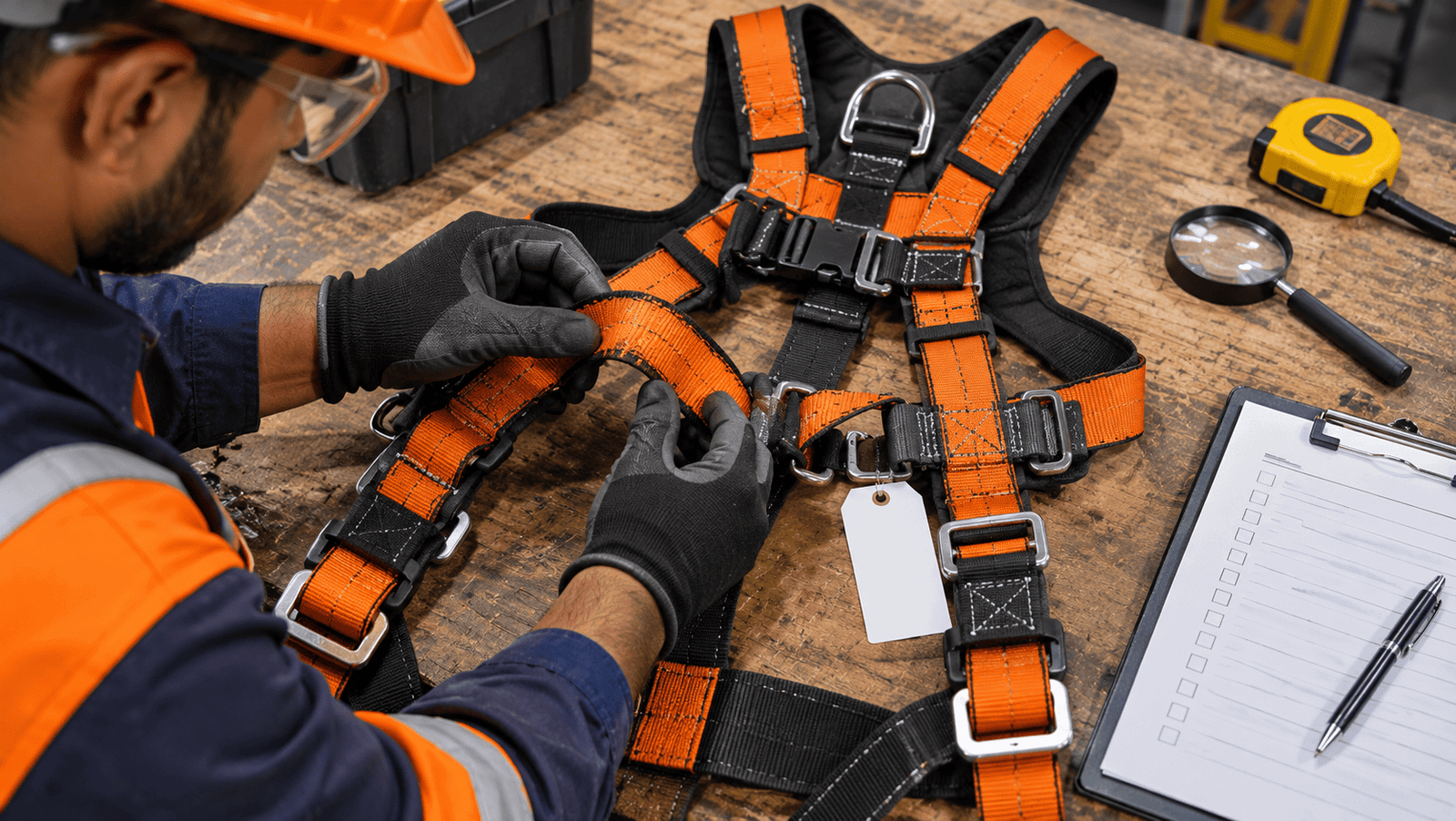
A thorough full body harness inspection takes a few minutes and can reveal damage that would cause the harness to fail when it is needed most. This guide explains the three levels of inspection, gives a step-by-step checklist and lists the signs that mean a harness must be retired.
Three levels of harness inspection
| Inspection | Who does it | When | |---|---|---| | Pre-use check | The user | Before every use | | Periodic detailed inspection | A competent person | At intervals set by the manufacturer and site procedures | | Inspection after an event | A competent person | After a fall, a shock load or any suspected damage |
The pre-use check is quick and visual. The periodic inspection is more detailed and must be recorded. If a harness has arrested a fall, it should be removed from service immediately, whatever it looks like.
Step-by-step harness inspection
Work through the harness in a set order so nothing is missed. Inspect in good light and bend the webbing gently to reveal hidden damage.
1. Labels and markings
- The label is present and readable.
- The manufacturer, model, standard, serial number and manufacturing date can be identified.
- The harness is within the service life stated by the manufacturer.
- Inspection records or tags are up to date.
If the label is missing or unreadable, the harness cannot be identified and should be removed from service.
2. Webbing
Inspect every strap along its full length, both sides:
- No cuts, tears, nicks or abrasion.
- No burns, melted areas or hard, glazed spots.
- No chemical damage, discolouration or stiffness.
- No excessive fraying, broken fibres or pulled threads.
- No mould, or signs of UV damage such as fading and brittleness.
3. Stitching
- All stitching is complete, with no broken, cut or pulled stitches.
- Load-bearing stitch patterns are intact.
- Fall indicators, where fitted, have not been activated.
4. Hardware: D-rings, buckles and adjusters
- No cracks, sharp edges, deformation or corrosion.
- D-rings sit correctly and move as designed.
- Buckles and adjusters fasten securely and release properly.
- Quick-connect buckles lock fully.
5. Fit and function
- The harness can be adjusted to fit the user snugly.
- Leg loops, chest strap and shoulder straps all adjust and hold.
- Keepers for loose strap ends are present.
When to retire a harness
Remove a harness from service immediately if:
- It has arrested a fall or been subjected to a shock load.
- Any webbing is cut, burnt, melted or chemically damaged.
- Load-bearing stitching is broken or a fall indicator has been activated.
- Hardware is cracked, bent, corroded or does not function.
- The label is missing or unreadable.
- It has passed the service life set by the manufacturer.
- It has been modified or repaired by anyone other than the manufacturer or an authorised person.
- There is any doubt about its condition.
When in doubt, take it out. A harness costs far less than the consequences of a failure.
Harnesses removed from service should be clearly tagged and kept separate so they cannot be picked up and used by mistake. Lifegear's own process is explained in What a Red Tag Means: Inside Lifegear's Equipment Inspection Process.
Storage and care
Many harnesses are damaged in storage, not in use. To extend service life:
- Store harnesses hanging, in a clean, dry, ventilated area away from direct sunlight.
- Keep them away from chemicals, oils, heat sources and sharp edges.
- Clean them according to the manufacturer's instructions and let them dry naturally.
- Do not mark the webbing with paint or solvent-based markers.
Record-keeping that survives an audit
Every periodic inspection should be recorded, including the harness identification, date, inspector, findings and outcome. Good records:
- Show which harnesses are safe for use and which are due for inspection.
- Help track recurring damage and its causes.
- Provide evidence during audits and investigations.
Paper registers are easy to lose and hard to search. Lifegear's Digital SMART Inspection uses Smart Tags with RFID, NFC or QR codes for instant field inspection and audit trails. Lifegear is also developing TAD, an upcoming digital tool for equipment inspection records. Read more in TAD Explained: Digitizing Equipment Inspection Records.
A note on standards
Full body harnesses should be manufactured and certified to a recognised standard. In India, this is covered by the relevant Bureau of Indian Standards (BIS) standard for industrial safety harnesses, and many harnesses also carry European EN certification. Check the markings on your equipment and follow the manufacturer's instructions for inspection intervals and service life.
Frequently asked questions
How often should a full body harness be inspected?
The user should check it before every use. A competent person should carry out a detailed, recorded inspection at the intervals set by the manufacturer and your site procedures, and after any fall or suspected damage.
Does a safety harness have an expiry date?
Most manufacturers set a maximum service life. A harness must also be retired earlier if it is damaged, has arrested a fall or fails inspection. Check the manufacturer's instructions for your model.
Can a harness be used again after a fall?
No. A harness that has arrested a fall should be removed from service immediately, even if it looks undamaged.
Can damaged harness webbing be repaired?
Harnesses should only be repaired by the manufacturer or someone authorised by them. Damaged harnesses should otherwise be retired.
Who is a competent person for harness inspection?
A competent person has the training, knowledge and experience to identify defects in fall protection equipment, and the authority to remove equipment from service.
Keep your fall protection equipment audit-ready
Lifegear provides rescue and fall protection equipment inspection, compliance support and digital inspection tracking. Contact us to set up inspections for your site.