The Future of Industrial Safety: Water Rescue, Air Rescue & Disaster Management at Lifegear
By Lifegear Team
2026-10-29
The Future of Industrial Safety: Water Rescue, Air Rescue & Disaster Management at Lifegear
Industrial safety is no longer limited to preventing workplace accidents or preparing for emergencies inside a factory. As industries, infrastructure, and communities face increasingly complex risks, emergency preparedness must extend beyond individual facilities.
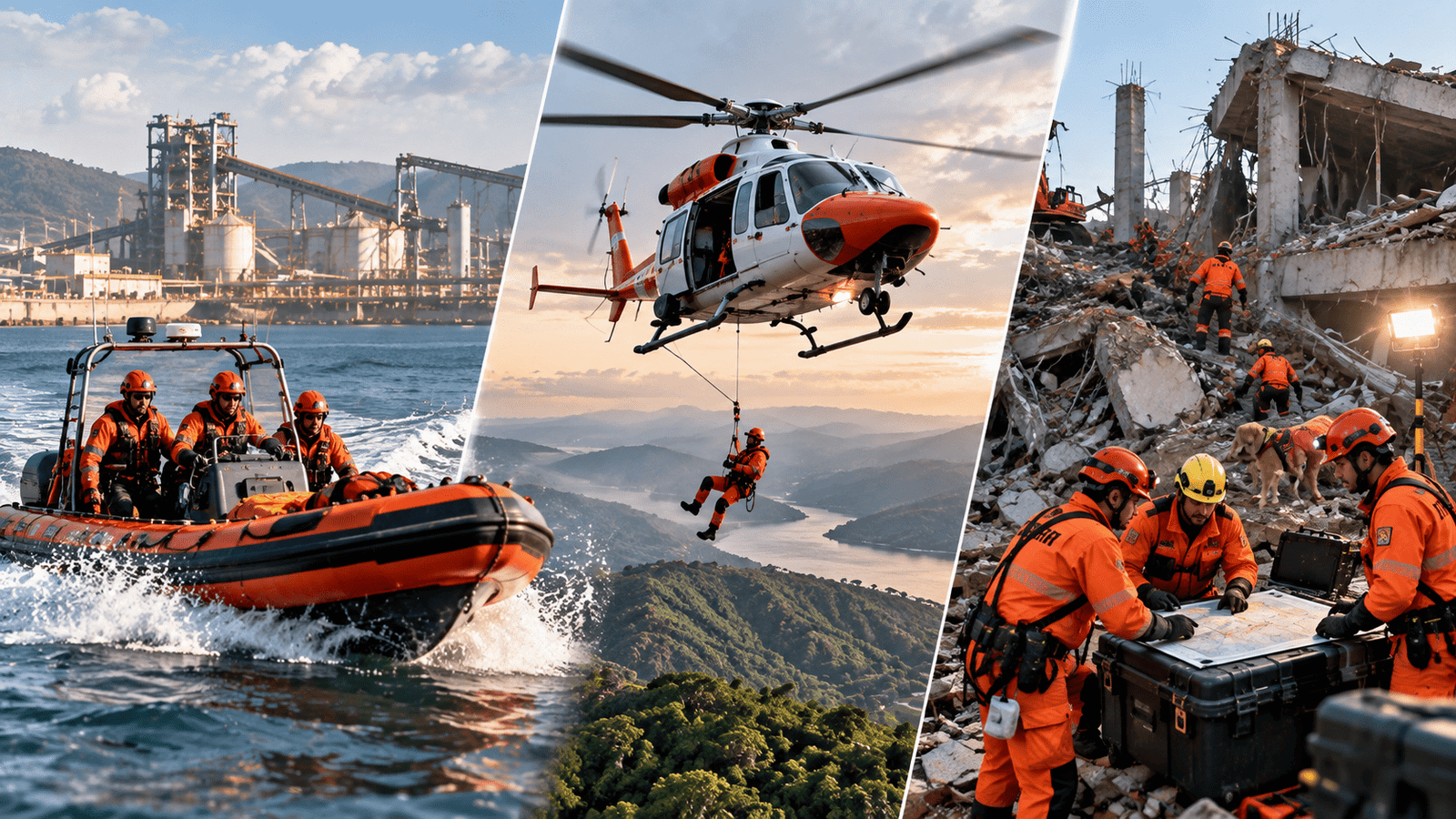
Lifegear Safetech has built its work around industrial rescue, emergency response, safety training, and fall protection engineering. Looking ahead, planned service areas such as water rescue, air rescue, and disaster management represent a broader vision: extending rescue capability beyond the plant gate and supporting emergency preparedness across a wider range of environments.
These areas require specialized personnel, equipment, procedures, and coordination. Each presents different operational challenges, but all share one essential requirement: the ability to prepare for emergencies before they occur and respond in a structured manner when they do.
1. Why Emergency Response Must Go Beyond Industrial Sites
Industrial facilities face a wide range of emergency scenarios, including falls from height, confined-space incidents, equipment-related injuries, fires, and hazardous-material exposure. Effective preparedness requires more than emergency plans on paper. It depends on trained personnel, suitable equipment, clearly assigned responsibilities, and procedures that can be put into practice under pressure.
However, emergencies are not confined to industrial premises.
Water-related incidents can occur at rivers, lakes, reservoirs, and coastal locations. Remote or inaccessible terrain can make conventional ground-based rescue difficult. Floods, major accidents, and natural disasters may require multiple response teams to coordinate across a large geographical area.
These situations demonstrate why emergency response capability must be adaptable.
The principles used in industrial rescue — risk assessment, preparedness, communication, incident coordination, and structured response — can also inform broader emergency management. The specific techniques and resources must change according to the environment, but the underlying need for preparation remains the same.
For Lifegear, exploring additional rescue and disaster management capabilities represents a potential next step in this wider safety vision.
2. Water Rescue: Preparing for Aquatic Emergencies
Water rescue involves responding to emergencies in or around bodies of water. These incidents can occur in swimming pools, rivers, lakes, reservoirs, coastal waters, and locations affected by flooding.
Unlike many land-based emergencies, aquatic incidents introduce additional risks. Water currents, changing weather, limited visibility, difficult access, and the possibility of rescuers becoming casualties can complicate an operation.
Understanding the challenges
Water rescue requires a response approach suited to the specific environment. A controlled poolside emergency differs significantly from a river rescue or an incident involving floodwater.
Key considerations may include:
- Environmental assessment: Understanding water conditions, currents, weather, visibility, and access limitations.
- Rescuer safety: Selecting appropriate techniques and protective equipment to reduce risks to the rescue team.
- Specialized training: Developing the skills required for the relevant type of aquatic rescue.
- Equipment readiness: Ensuring rescue equipment is appropriate for the environment and maintained for operational use.
- Medical coordination: Planning for prompt assessment and medical care following a successful rescue.
- Team communication: Establishing clear roles and coordination between rescuers and supporting emergency services.
A safe water rescue operation depends on appropriate training, sound decision-making, and the ability to recognize when conditions exceed a team's capabilities.
Why water rescue matters
Water-related emergencies can affect industrial sites, infrastructure projects, public spaces, and communities. Facilities near rivers, reservoirs, or coastal areas may need to consider water-related risks as part of their broader emergency planning.
As a planned area of development, water rescue reflects Lifegear's interest in a more comprehensive approach to emergency response. Any operational service in this area would require appropriately trained personnel, suitable equipment, defined procedures, and the necessary coordination with relevant authorities.
3. Air Rescue: Reaching Difficult and Remote Locations
Some emergencies occur in locations where ground access is slow, difficult, or unsafe. Remote terrain, inaccessible infrastructure, large disaster zones, and certain time-critical incidents can create significant challenges for conventional rescue teams.
Air rescue can help address some of these challenges by using suitable aircraft or helicopters as part of a coordinated emergency response.
However, aviation-based rescue is a specialized operation. It requires trained personnel, aviation expertise, suitable aircraft, careful mission planning, and coordination between ground teams and aviation operators.
What air rescue can involve
Depending on the incident, available resources, and operational permissions, air-assisted rescue may support activities such as:
- Reaching remote or difficult-to-access locations.
- Transporting specialist personnel or essential equipment.
- Supporting evacuation from locations where ground access is restricted.
- Coordinating patient transfer with appropriate medical services.
- Providing logistical support during large-scale emergencies.
Not every emergency requires an aircraft, and air support is not automatically the safest or fastest option. Weather, terrain, landing or hoisting conditions, aircraft limitations, and the condition of the casualty all influence whether an aerial operation is appropriate.
Coordination is critical
Air rescue cannot be treated as a standalone activity. It must be integrated with ground-based incident management, medical support, communications, and the relevant aviation and emergency authorities.
Ground teams must understand their responsibilities, communication procedures, and safety boundaries. Aviation operations must be conducted by appropriately qualified and authorized professionals.
For Lifegear, air rescue represents a potential future capability within a wider emergency response framework. Developing such a capability would depend on the appropriate expertise, partnerships, resources, and regulatory requirements.
4. Disaster Management: From Preparedness to Recovery
Disaster management addresses the organized preparation for, response to, and recovery from major emergencies that affect people, infrastructure, or communities.
Unlike an incident limited to a single workplace, a disaster can affect multiple locations simultaneously. Roads may become inaccessible, communication networks may be disrupted, essential services may be interrupted, and several response agencies may need to work together.
In these situations, effective rescue is only one part of the overall response.
The four key stages of disaster management
1. Preparedness
Preparedness involves identifying potential hazards, assessing vulnerabilities, developing response plans, training personnel, conducting exercises, and arranging the resources needed for an emergency.
Organizations can strengthen preparedness by assigning responsibilities in advance, establishing communication procedures, identifying evacuation routes, and testing their plans through realistic exercises.
2. Response
The response phase begins when an emergency occurs. Priorities may include protecting life, assessing immediate hazards, activating emergency procedures, coordinating responders, and providing urgent assistance.
Clear command structures and reliable communication are essential when several teams or agencies are involved.
3. Relief
Relief activities address immediate needs during and after an emergency. Depending on the incident, these may include temporary shelter, food, water, medical assistance, essential supplies, and support for affected people.
Relief operations require coordination to ensure that resources reach the locations and people who need them.
4. Recovery
Recovery focuses on restoring essential services, rebuilding affected infrastructure, supporting communities, and learning from the incident.
Post-incident reviews can identify weaknesses in emergency plans, communication, resource allocation, and response procedures. Those findings can then inform future preparedness.
These stages are interconnected. Preparedness improves the quality of the initial response, while lessons learned during response and recovery can strengthen future plans.
Why disaster management needs structured coordination
Large emergencies often involve several organizations with different responsibilities. Without clear communication and coordination, resources may be duplicated, important information may be missed, and response activities may become fragmented.
A structured approach helps establish:
- Defined roles and responsibilities.
- Reliable channels for sharing incident information.
- Procedures for requesting and allocating resources.
- Coordination between rescue, medical, logistical, and support teams.
- Clear processes for reviewing performance and improving future readiness.
Lifegear's experience in industrial safety and rescue provides a foundation for understanding the importance of preparation, equipment readiness, training, and coordinated response. Extending that experience into disaster management would require adapting these principles to broader incidents and working alongside the appropriate agencies and specialist organizations.
5. Connecting Industrial Rescue with Broader Emergency Preparedness
Industrial rescue, water rescue, air rescue, and disaster management involve different environments and technical requirements. They should not be treated as interchangeable services.
Nevertheless, they share several fundamental principles.
Risk assessment before an incident
Effective emergency response starts with understanding what can go wrong. Identifying hazards, evaluating their potential consequences, and establishing appropriate controls help organizations prepare for realistic scenarios.
Training that reflects operational conditions
Emergency response requires more than theoretical knowledge. Personnel need training appropriate to their assigned responsibilities, equipment, environment, and level of risk.
Specialist activities such as water rescue and aviation-based rescue require additional qualifications and competencies relevant to those operations.
Equipment readiness and inspection
Rescue equipment must be suitable for its intended application, maintained correctly, and inspected according to relevant requirements. Equipment availability alone does not guarantee readiness; teams must also know how to use it safely.
Communication and incident coordination
During an emergency, responders need timely information about hazards, access, personnel, resources, and changing conditions. Clear communication helps teams make informed decisions and coordinate their actions.
Learning and continuous improvement
Exercises, inspections, incident reviews, and documented corrective actions can help identify gaps before they contribute to a serious incident.
These principles connect industrial safety with wider emergency preparedness while recognizing that every rescue discipline requires its own technical standards and operational procedures.
6. The Role of Technology in Modern Emergency Response
Technology can support emergency management by improving the way information is recorded, communicated, and used during safety operations.
Digital tools may help organizations maintain inspection records, document risk assessments, track corrective actions, record safety observations, and organize emergency-related information.
For example, digital inspection records can help establish whether equipment checks have been completed. Emergency management systems can help teams organize incident information and response activities. Alerting systems can help communicate important information to designated personnel.
However, technology is only one part of a reliable emergency response system.
A digital platform cannot replace appropriately trained responders, sound operational judgment, suitable rescue equipment, or effective coordination. Technology must support established procedures rather than create an additional layer of complexity during an emergency.
Lifegear's work involving digital safety and rescue management reflects the potential for technology to complement established safety practices. As emergency response requirements evolve, the challenge is to ensure that digital tools remain practical, reliable, and appropriate to the environments in which they are used.
7. What This Future Could Mean for Lifegear
Lifegear's established focus includes industrial rescue management, fall protection engineering, safety training, and related safety solutions. Planned exploration of water rescue, air rescue, and disaster management points toward a broader vision of emergency preparedness.
This direction is significant because emergencies rarely fit neatly into one category. An industrial incident may require coordination with external emergency services. Severe weather may affect an industrial facility and the surrounding community. A large-scale emergency may require rescue, medical, logistical, and recovery resources to work together.
A broader emergency response approach could help organizations think beyond individual hazards and consider the full chain of preparedness, response, and recovery.
Any expansion into these specialist areas must be supported by the right people, qualifications, equipment, operating procedures, partnerships, and regulatory compliance. Building capability responsibly is more important than simply adding new service categories.
The objective is not to suggest that every rescue discipline can be handled in the same way. It is to recognize that a comprehensive safety strategy must account for different emergency scenarios and the specialist capabilities required to address them.
Conclusion: Building a Broader Vision for Emergency Preparedness
The future of industrial safety depends on more than preventing incidents within the workplace. It also requires organizations to consider how emergencies can affect surrounding infrastructure, communities, and essential services.
Water rescue, air rescue, and disaster management each present distinct operational challenges. Together, they illustrate the range of capabilities that may be needed to respond to emergencies in different environments.
For Lifegear, these planned service areas represent a broader vision: applying the principles of preparedness, training, equipment readiness, and coordinated response to an expanding range of emergency scenarios.
As this vision develops, the priority remains clear — building capabilities responsibly, working with qualified specialists, and ensuring that every response approach is matched to the risks it is designed to address.
Follow Lifegear's next chapter — visit Lifegear.